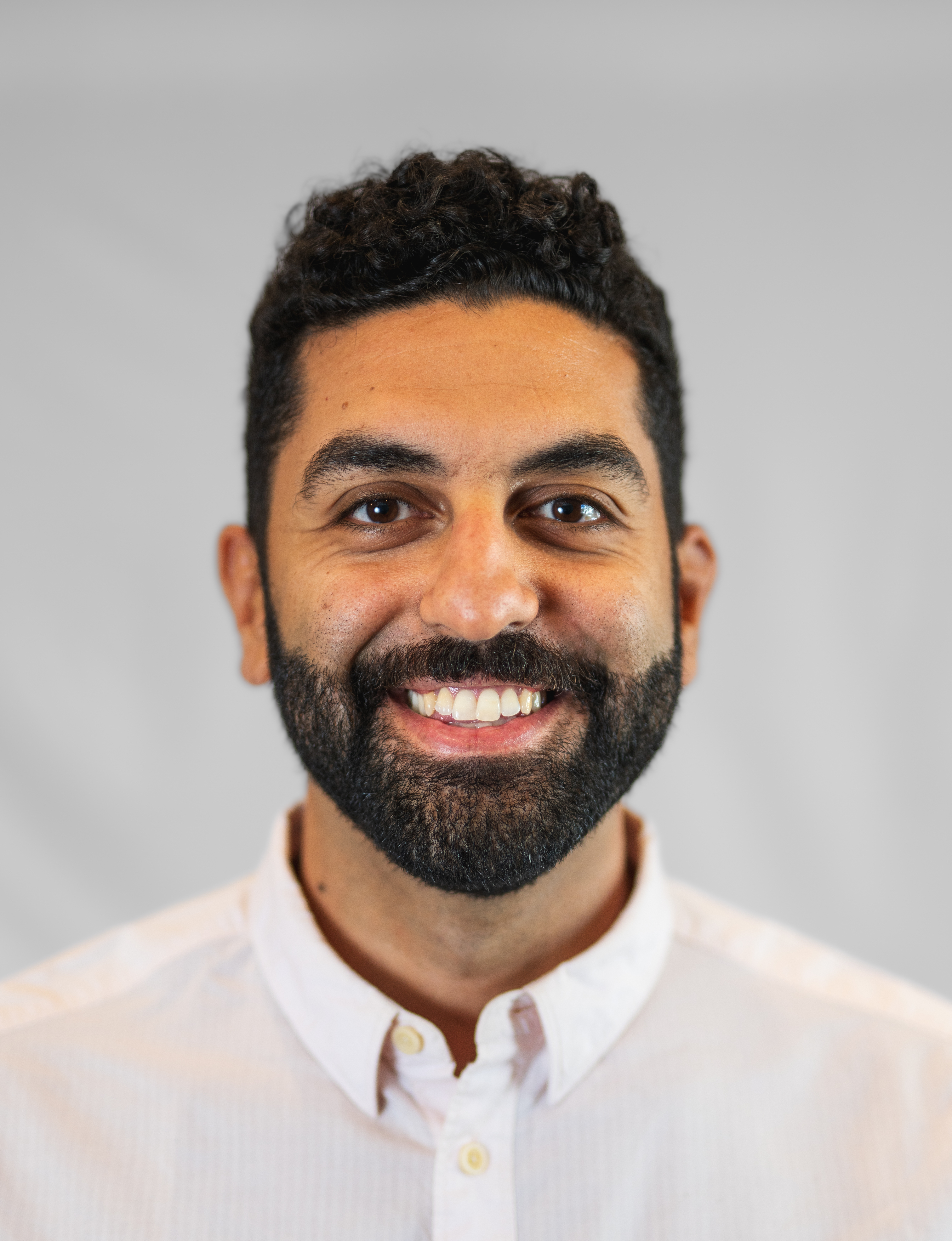
Adham Kalila
Adham Kalila
Transportation Engineer and Planner.
Product Builder. Academic at heart.
I use mobility data to understand how people move through cities — and build products that turn those insights into action. From Cairo's informal transit networks to US traffic safety at scale, I work at the intersection of urban planning, data science, and product management.
About Me
Where I've Been
Cairo Origins Montreal McGill Engineering Cairo Transport for Cairo Cambridge, MA MIT Research San Francisco StreetLight Data New York StreetLight / Jacobs Tap a stop to learn more

Cairo — Origins

Born and raised in Cairo — the city that shaped a lifelong fascination with how people move through dense, complex urban environments.

Montreal — McGill Engineering

Completed a Bachelor of Civil Engineering at McGill with a 3.81 GPA, earning the Dean's Honor List and the Charles H. Ivey Foundation Scholarship.

Cairo — Transport for Cairo

Co-founded Transport for Cairo, mapping informal transit networks and calculating accessibility for millions of residents using Python, QGIS, and crowd-sourced data.

Cambridge, MA — MIT Research

Earned two Master's degrees at MIT in Transportation and Urban Planning, researching travel demand modeling from call records and the effects of new transit infrastructure.

San Francisco — StreetLight Data

Joined StreetLight Data as Learning Services Product Manager, designing training programs and driving a 40% increase in monthly active users.

New York — StreetLight / Jacobs

Currently Product Manager and Owner at StreetLight Data (Jacobs), leading a traffic safety analytics platform serving 3,000+ counties across the US.

What I'm Good At
Skills & Approach

I work at the intersection of cities, data, and products. My foundation is in civil and transportation engineering, trained at McGill and MIT, but my career has taken me from mapping Cairo's informal transit networks on the ground to building products that serve transportation professionals across thousands of public agencies.

I'm most at home when a problem is technically complex but needs to be communicated clearly: turning large mobility datasets into decisions, translating user research into product roadmaps, or explaining why a city's accessibility looks completely different depending on how you measure it. Along the way I've built fluency in Python, SQL, GIS, and data visualization, not as ends in themselves, but as tools for understanding how people move and what gets in their way.

What drives me is the belief that good urban data, handled well, can make cities meaningfully more equitable and efficient. That's what got me into research, it's what keeps me in product, and it's what I'm still trying to do.

Education & Experience
Academic Background
McGill University
Bachelor of Engineering
Civil Engineering
2008 – 2012 · Montréal, Canada
GPA
3.81 / 4.00
Awards & Distinctions
  • Dean's Honor List, Faculty of Engineering
  • Charles H. Ivey Foundation Scholarship
  • Engineering Award, Faculty of Engineering
  • 1st Place, Canadian Geotechnical Society Undergraduate Award
MIT
Master of Science
Transportation
2016 – 2018 · Cambridge, USA
GPA
4.9 / 5.0
Research Focus

Travel demand modeling from call detail records, fuel consumption analysis using big data, and agent-based simulation of policy effects on driver behavior. Published in Transportation Research Record.

MIT
Master of Science
Urban Planning
2018 – 2019 · Cambridge, USA
GPA
4.8 / 5.0
Research Focus

Multimodal accessibility analysis, micromobility integration, and informal transit network mapping. Research applied to Cairo's transit system in collaboration with Transport for Cairo.

Certifications
PMC Level II
Pragmatic Institute · Product Management & Product Marketing
Download Resume PDF · Last updated 2026
Projects
Selected Work
Maps showing accessibility improvement due to micromobility in San Francisco Bay Area
Accessibility Analysis Micromobility Published · NUMO 2023
All Possible Commutes: How Micromobility and Realistic Car Travel Times Impact Accessibility Analysis
A city-scale comparative analysis of how micromobility and realistic car travel times reshape our understanding of who can reach jobs — and how transit quality determines whether a bike can compete with a car in Cairo, CDMX, Minneapolis, and San Francisco Bay Area.
Key Finding
Micromobility is competitive with cars for commutes under 15 minutes — but at 30, 45, and 60-minute thresholds, matching car-level job access requires combining micromobility with robust public transportation. A city's transit quality is the decisive factor.
Authors: Kalila A., Mahfouz H., Kelleny B., Melegy A.
Publisher: New Urban Mobility Alliance (NUMO) · 2023